
Completion of A-bomb Pictures
―High school students create pictures of atomic bombing experiences―
This Foundation is involved in the creation of A-bomb pictures that depict scenes at the time of the bombing from the memories of the hibakusha and thus communicate the situation at that time.
With the cooperation of Hiroshima Municipal Motomachi Senior High School Creative Expression Course, the high school students work together with Atomic Bomb Witnesses and others from this Foundation to create the pictures.
From last year, six hibakusha collaborated with fifteen students, and have now completed fifteen pictures.
This project started in 2007, and to date over 130 students have been involved to create as many as 152 precious pictures.
In 2020, because of the spread of COVID-19, the school had to be closed for a long period of time, and for this reason, it took longer than normal to complete the pictures. The completion ceremony was held at Motomachi High School on July 20, with thorough measures in place including the wearing of masks and social distancing. In attendance were six hibakusha, the students who created the pictures as well as other students from the Creative Expression Course, and staffs of this Foundation and Motomachi High School.
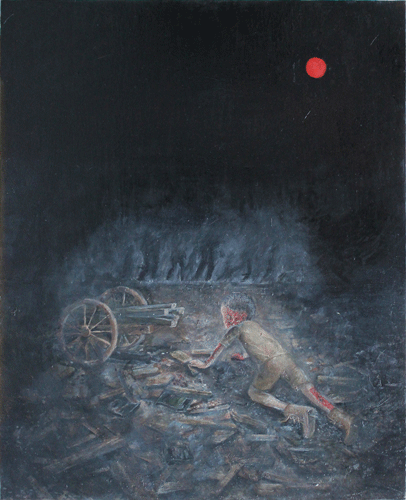
At the completion ceremony, a speech was given by Yuri Okada (2nd year), who depicted a scene from the memory of hibakusha Satoru Arai. She spoke about how she struggled to paint the scene of soot and dust floating around when she was depicting the darkness immediately after the atomic bomb was dropped on the city of Hiroshima, but said that she was able to eventually paint her own interpretation of the scene after listening to Mr. Arai speak about it numerous times. Ms. Okada said that because she had attended elementary and junior high school at schools outside of the Hiroshima city, she had not been involved in detailed peace studies before this. For this reason, she watched the film Hiroshima (1953) and investigated that period using photographic materials, so that she could learn about the historical background and to help in the creation of her A-bomb picture. She said that the most important thing was that through creating the picture, she learned in greater depth about the atomic bombing. She also said that through the emotionally tough work to create the picture, she keenly felt that we need to confront the issue of the atomic bomb. Ms. Okada closed her powerful speech by saying "I cannot speak for Mr. Arai to express what he felt at the time of the bombing, but I want to communicate to as many people as possible what I felt and what I learned through the process of creating this work."
Due to COVID-19, in the process of creating the pictures this time it was not possible for the students to speak to the hibakusha face-to-face. Therefore, meetings were held over the phone, and the progress of the pictures was shown to the hibakusha using photos. To secure time to create the pictures, the students sometimes took their canvas home with them. The A-bomb Pictures that are the result of these efforts by the students will be used in talks given by hibakusha to ensure that people gain a deep understanding of the atomic bombing experience, and will also be loaned out and provided as image data to the media, so that the pictures can be of use in the future to pass on the reality of the damage inflicted by the atomic bombing.

In 2020, because of the spread of COVID-19, the school had to be closed for a long period of time, and for this reason, it took longer than normal to complete the pictures. The completion ceremony was held at Motomachi High School on July 20, with thorough measures in place including the wearing of masks and social distancing. In attendance were six hibakusha, the students who created the pictures as well as other students from the Creative Expression Course, and staffs of this Foundation and Motomachi High School.
At the completion ceremony, a speech was given by Yuri Okada (2nd year), who depicted a scene from the memory of hibakusha Satoru Arai. She spoke about how she struggled to paint the scene of soot and dust floating around when she was depicting the darkness immediately after the atomic bomb was dropped on the city of Hiroshima, but said that she was able to eventually paint her own interpretation of the scene after listening to Mr. Arai speak about it numerous times. Ms. Okada said that because she had attended elementary and junior high school at schools outside of the Hiroshima city, she had not been involved in detailed peace studies before this. For this reason, she watched the film Hiroshima (1953) and investigated that period using photographic materials, so that she could learn about the historical background and to help in the creation of her A-bomb picture. She said that the most important thing was that through creating the picture, she learned in greater depth about the atomic bombing. She also said that through the emotionally tough work to create the picture, she keenly felt that we need to confront the issue of the atomic bomb. Ms. Okada closed her powerful speech by saying "I cannot speak for Mr. Arai to express what he felt at the time of the bombing, but I want to communicate to as many people as possible what I felt and what I learned through the process of creating this work."
Due to COVID-19, in the process of creating the pictures this time it was not possible for the students to speak to the hibakusha face-to-face. Therefore, meetings were held over the phone, and the progress of the pictures was shown to the hibakusha using photos. To secure time to create the pictures, the students sometimes took their canvas home with them. The A-bomb Pictures that are the result of these efforts by the students will be used in talks given by hibakusha to ensure that people gain a deep understanding of the atomic bombing experience, and will also be loaned out and provided as image data to the media, so that the pictures can be of use in the future to pass on the reality of the damage inflicted by the atomic bombing.
"Looking for water"
by Moeka Shimomukai (Motomachi High School Creative Expression Course) and Sadae Kasaoka (Atomic Bomb Witness)
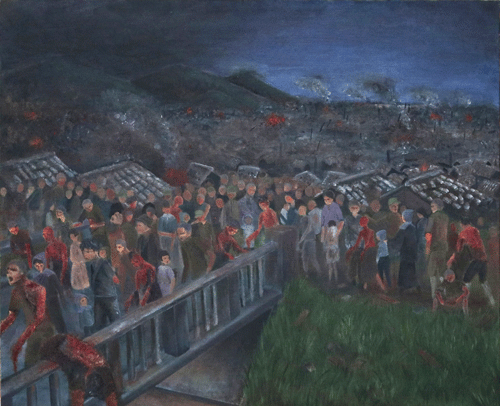
"Just trying to get away"
by Yusei Marukawa (Motomachi High School Creative Expression Course) and Hiroaki Kawasaki (Atomic Bomb Witness)
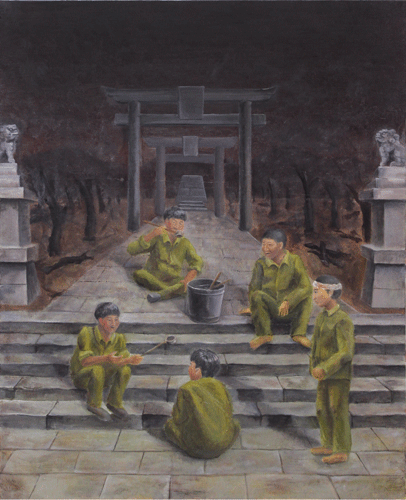
"Stone steps with four people sitting and drinking sake"
by Asuka Kawasaki (Motomachi High School Creative Expression Course) and Yoshinori Kuniwake (Atomic Bomb Witness)
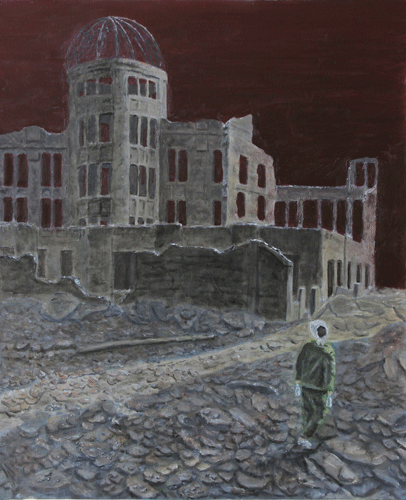
"A-bomb Dome seen on the way home with a bottle in each hand"
by Kanato Kawasaki (Motomachi High School Creative Expression Course) and Yoshinori Kuniwake
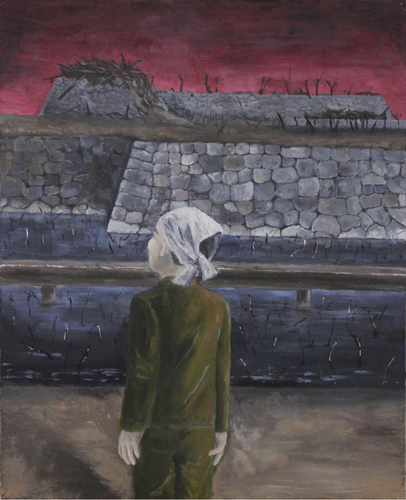
"Hiroshima Castle Tower, crumbled in the bomb blast"
by Hanabi Kawamoto (Motomachi High School Creative Expression Course) and Yoshinori Kuniwake
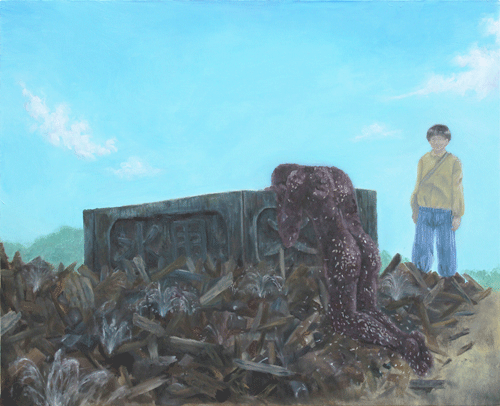
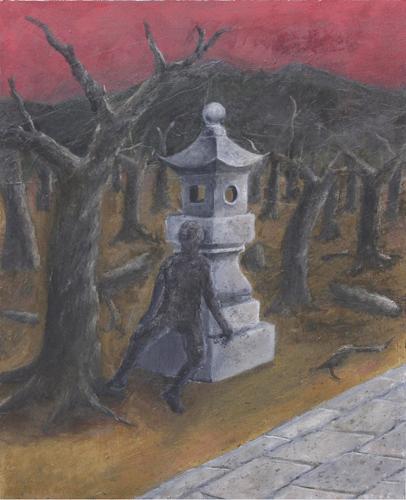
"Blackened corpse leaning on a stone lantern"
by Harune Kikkawa (Motomachi High School Creative Expression Course) and Yoshinori Kuniwake
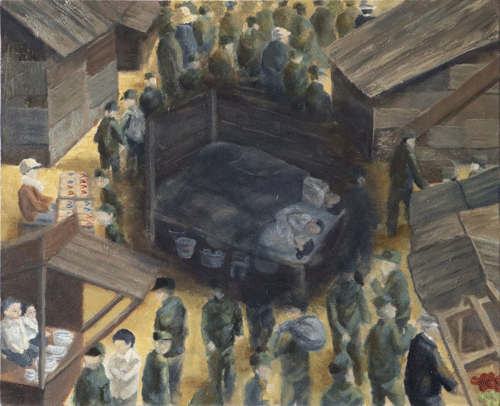
"Living in the black market"
by Ayano Gobara (Motomachi High School Creative Expression Course) and Hiroshi Shimizu (Atomic Bomb Witness)
"After effects from the bombing"
by Kokone Taga (Motomachi High School Creative Expression Course) and Hiroshi Shimizu
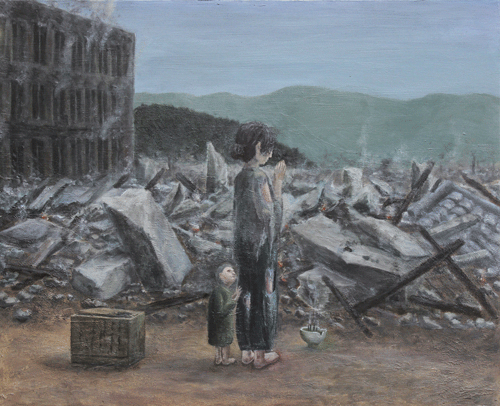
"A mother joining her hands in prayer"
by Mahiru Harada (Motomachi High School Creative Expression Course) and Hiroshi Shimizu
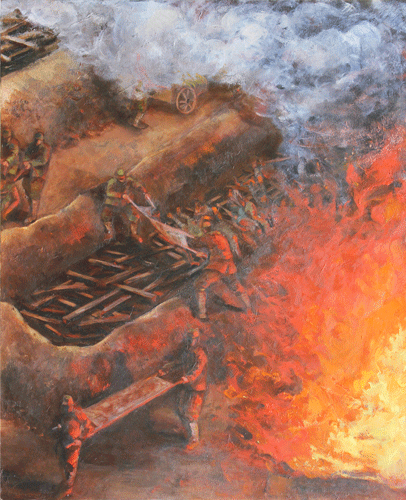
"A school yard turned into a cremation site"
by Miharu Okabe (Motomachi High School Creative Expression Course) and Teruko Yahata (Atomic Bomb Witness)
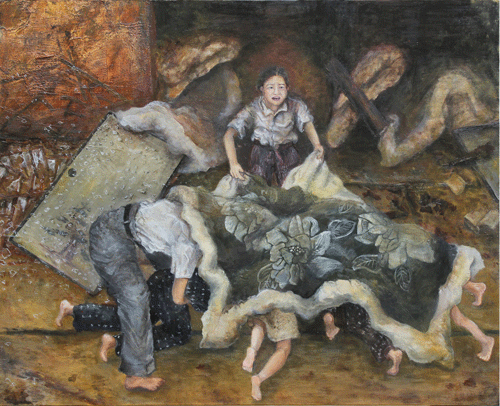
"Let's die together, we're all together!!"
by Akiho Takehara (Motomachi High School Creative Expression Course) and Teruko Yahata
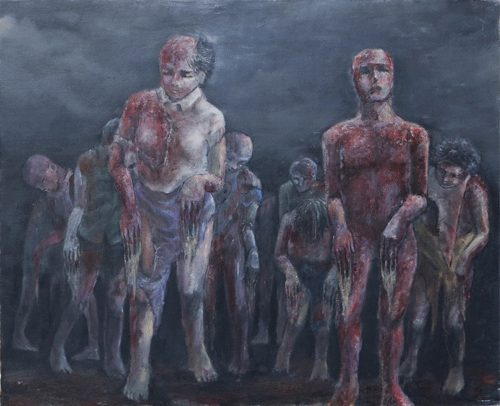
"The wounded approaching head-on"
by Jun Nagaoki (Motomachi High School Creative Expression Course) and Teruko Yahata
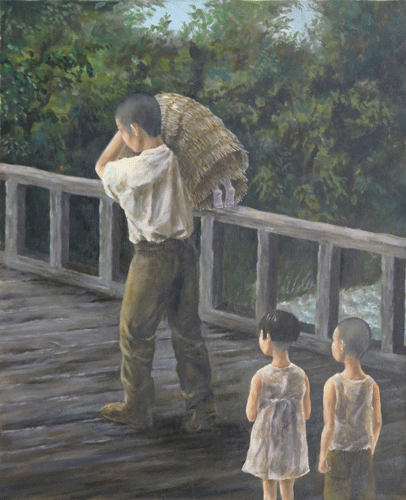
"A man carrying the dead body of a child in a straw mat"
by Hazuki Fukuda (Motomachi High School Creative Expression Course) and Teruko Yahata
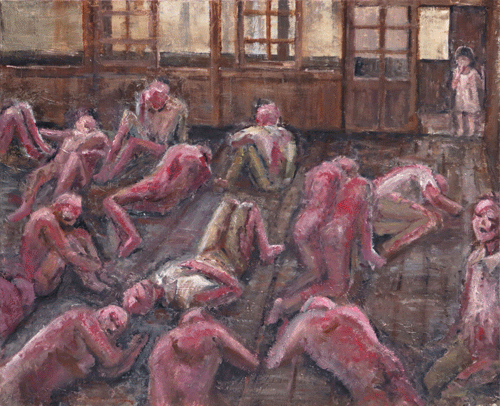
"Classroom filled with the wounded"
by Kotone Morinaga (Motomachi High School Creative Expression Course) and Teruko Yahata
"Bright-red sun in the midst of darkness"
by Yuri Okada (Motomachi High School Creative Expression Course) and Satoru Arai (Hiroshima Peace Volunteer)
(Peace Memorial Museum Outreach Division)