
Hiroshima Peace Memorial Museum
"HIROSHIMA APPEALS" Corner Opens
On March 28, 2026, an exhibit entitled "HIROSHIMA APPEALS" was set up on the first floor of the East Building of the Hiroshima Peace Memorial Museum.
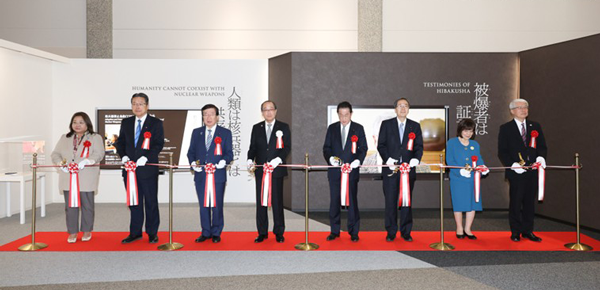
This exhibit is designed to help visitors who have seen the exhibits in the Main Building deepen their understanding of the inhumanity of nuclear weapons and consider how they can work for the abolition of nuclear weapons and lasting world peace. Former Prime Minister Fumio Kishida, members of the Diet, and Hiroshima Mayor Kazumi Matsui attended the opening ceremony in the Memorial Hall of the museum.
 A message from UN Under-Secretary-General and High Representative for Disarmament Affairs Izumi Nakamitsu was read aloud: "As visitors walk through this exhibit, they not only learn about nuclear weapons, but also witness the human consequences of nuclear weapons firsthand and come to understand why these weapons must be abolished."
Vice Chairperson of the Foundation Shiro Tani then explained the purpose of this new exhibit, "HIROSHIMA APPEALS".
A message from UN Under-Secretary-General and High Representative for Disarmament Affairs Izumi Nakamitsu was read aloud: "As visitors walk through this exhibit, they not only learn about nuclear weapons, but also witness the human consequences of nuclear weapons firsthand and come to understand why these weapons must be abolished."
Vice Chairperson of the Foundation Shiro Tani then explained the purpose of this new exhibit, "HIROSHIMA APPEALS".
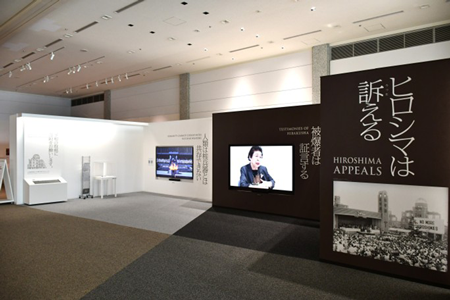 This exhibit begins with a photograph from the second Peace Festival held in 1948.
The photograph shows the ceremony taking place in what was then known as Peace Plaza (now Peace Memorial Park), on the opposite bank from the Atomic Bomb Dome, with a large "NO MORE HIROSHIMAS" sign displayed prominently.
That image depicts the appeal for peace that Hiroshima has been conveying to the world since shortly after the war.
This exhibit begins with a photograph from the second Peace Festival held in 1948.
The photograph shows the ceremony taking place in what was then known as Peace Plaza (now Peace Memorial Park), on the opposite bank from the Atomic Bomb Dome, with a large "NO MORE HIROSHIMAS" sign displayed prominently.
That image depicts the appeal for peace that Hiroshima has been conveying to the world since shortly after the war.
Next to the photo panel, we present the two large 86-inch monitors displaying video testimonies of hibakusha as well as a slideshow.
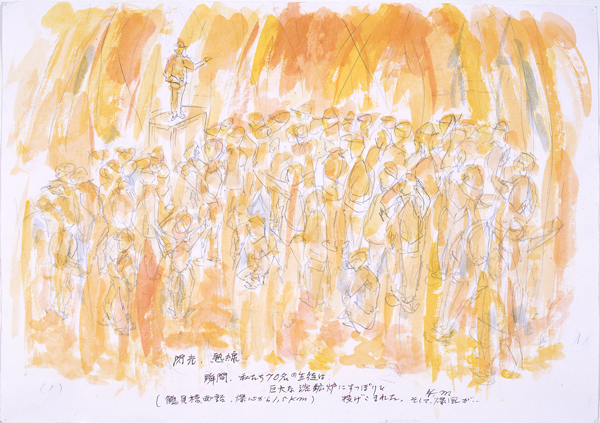
The first monitor presents a six-minute video titled "TESTIMONIES OF HIBAKUSHA", featuring personal stories recounted by nine hibakusha. Interwoven with "A-bomb Drawings" created by hibakusha, the video makes inescapable the devastating damage that nuclear weapons wreak on cities and people. Hiromu Morishita (then, 14) was mobilized for building demolition on the day of the bombing. Having experienced the explosion 1.5 kilometers from the hypocenter, he testifies in the video about that instant: "I felt as if everything had been thrown into a gigantic blast furnace, glowing red-hot." Next, Shunichiro Arai (then, 13), who was exposed to radiation when he entered the city that day and who is currently battling his sixth bout of cancer, says, "The effects of the atomic bomb didn't end 80 years ago. Even now, all hibakusha across Japan are affected in some way, as I have been." Teruko Yahata (then, 8), who was exposed to the bomb at home, 2.5 kilometers from the hypocenter, says, "I never want anyone to go through such a tragedy. I feel this with all my heart."
 The second monitor presents a five-minute slideshow titled "HUMANITY CANNOT COEXIST WITH NUCLEAR WEAPONS".
It highlights the tireless endeavors of the hibakusha and the resulting developments within the international community, including the reference to the "catastrophic humanitarian consequences" of the use of nuclear weapons in the 2010 NPT Review Conference Final Document, the adoption of the Treaty on the Prohibition of Nuclear Weapons, and the Nobel Peace Prize awarded to the Japan Confederation of A- and H-Bomb Sufferers Organizations (Nihon Hidankyo).
The second monitor presents a five-minute slideshow titled "HUMANITY CANNOT COEXIST WITH NUCLEAR WEAPONS".
It highlights the tireless endeavors of the hibakusha and the resulting developments within the international community, including the reference to the "catastrophic humanitarian consequences" of the use of nuclear weapons in the 2010 NPT Review Conference Final Document, the adoption of the Treaty on the Prohibition of Nuclear Weapons, and the Nobel Peace Prize awarded to the Japan Confederation of A- and H-Bomb Sufferers Organizations (Nihon Hidankyo).
Despite all this, many nuclear weapons still exist in the world, and nuclear disarmament has stalled. At a time when the danger of nuclear weapons being used is becoming increasingly real, the video delivers Hiroshima's powerful call for everyone everywhere to join us in striving for a world without nuclear weapons.
Displayed next to the monitor is a replica of the Nobel Peace Prize medal awarded to the Nihon Hidankyo. At the end of the HIROSHIMA APPEALS exhibit, as one answer to the question, "How can I contribute to the movement?", we have installed a box for donations to our Foundation's projects promoting peace culture.
Since the renovation, visitors coming down the stairs from the second floor of the East Building have been seen stopping to watch the videos of hibakusha testimonies, while others exchange views as they look at the slideshow, including many visitors from overseas. We hope that, after learning about the reality of the atomic bombing through the Main Building exhibitions, visitors will use this corner as an opportunity to reflect profoundly on the hibakusha messages, to ponder what they can do for peace, and to be inspired to take action.
This exhibit is designed to help visitors who have seen the exhibits in the Main Building deepen their understanding of the inhumanity of nuclear weapons and consider how they can work for the abolition of nuclear weapons and lasting world peace. Former Prime Minister Fumio Kishida, members of the Diet, and Hiroshima Mayor Kazumi Matsui attended the opening ceremony in the Memorial Hall of the museum.
The Opening Ceremony
(Photo: The City of Hiroshima)
The "HIROSHIMA APPEALS"
Next to the photo panel, we present the two large 86-inch monitors displaying video testimonies of hibakusha as well as a slideshow.
The first monitor presents a six-minute video titled "TESTIMONIES OF HIBAKUSHA", featuring personal stories recounted by nine hibakusha. Interwoven with "A-bomb Drawings" created by hibakusha, the video makes inescapable the devastating damage that nuclear weapons wreak on cities and people. Hiromu Morishita (then, 14) was mobilized for building demolition on the day of the bombing. Having experienced the explosion 1.5 kilometers from the hypocenter, he testifies in the video about that instant: "I felt as if everything had been thrown into a gigantic blast furnace, glowing red-hot." Next, Shunichiro Arai (then, 13), who was exposed to radiation when he entered the city that day and who is currently battling his sixth bout of cancer, says, "The effects of the atomic bomb didn't end 80 years ago. Even now, all hibakusha across Japan are affected in some way, as I have been." Teruko Yahata (then, 8), who was exposed to the bomb at home, 2.5 kilometers from the hypocenter, says, "I never want anyone to go through such a tragedy. I feel this with all my heart."
A gigantic blast furnace Painted by Hiromu Morishita
(Source: Hiroshima Peace Memorial Museum)
Despite all this, many nuclear weapons still exist in the world, and nuclear disarmament has stalled. At a time when the danger of nuclear weapons being used is becoming increasingly real, the video delivers Hiroshima's powerful call for everyone everywhere to join us in striving for a world without nuclear weapons.
Displayed next to the monitor is a replica of the Nobel Peace Prize medal awarded to the Nihon Hidankyo. At the end of the HIROSHIMA APPEALS exhibit, as one answer to the question, "How can I contribute to the movement?", we have installed a box for donations to our Foundation's projects promoting peace culture.
Since the renovation, visitors coming down the stairs from the second floor of the East Building have been seen stopping to watch the videos of hibakusha testimonies, while others exchange views as they look at the slideshow, including many visitors from overseas. We hope that, after learning about the reality of the atomic bombing through the Main Building exhibitions, visitors will use this corner as an opportunity to reflect profoundly on the hibakusha messages, to ponder what they can do for peace, and to be inspired to take action.
(Peace Memorial Museum Curatorial and Exhibition Division)