
Mayors for Peace Internship—Focusing on Peace Studies for Youth
Mayors for Peace held a three-day internship (February 4 to 6) on peace studies by local governments.
Staff from 15 Japanese municipalities nationwide participated.
Icebreakers and group work were then facilitated by Soichi Hiura, assistant director of the Peace Studies Division. Each participant described their own government's initiatives and challenges, prompting a lively exchange of views.
In the afternoon, the group toured the monuments in Peace Memorial Park with a Peace Volunteer guide and experienced an AI-powered Atomic Bomb Testimony Response Device (currently in the trial phase). The device answers questions about hibakusha testimony. Learning this historical background while walking on the very ground where it occurred gave participants a deeper, more personal understanding of the realities of atomic bombing. It also renewed their commitment to peace and deepened their understanding of how these experiences can be passed down to future generations.
For elementary school students, they proposed that local governments send selected students to Hiroshima and Nagasaki and "record their experiences on video to share with those who are unable to visit."
For junior high school students, they proposed making Hiroshima and other peace-related sites destinations for school excursions. The excursions should be followed up by “creating ways for students who visit these destinations to share what they learned with elementary school students."
For high school students and older, they proposed that initiatives to ensure that learning would continue, such as training them to serve as peace studies facilitators through learning from dispatched Atomic Bomb Legacy Successors.
Specifically, "to create opportunities to ponder peace without making it the main focus," they suggested holding stamp rallies in places where young people congregate. Another idea is to display posters that pose questions like "Which is more peaceful, A or B?" The goal would be to get people who see the posters to stop and think.
Specifically, the proposal emphasized sensory experiences during formative years: Elementary school students learn about the wartime history of their communities. It was also proposed that middle school students visit Hiroshima, Nagasaki, and other peace-related sites to interact with peers and then share what they learned with elementary school students, and that adults play a role in connecting generations by participating in school education as legacy successors of wartime experiences.
Specifically, their roadmap calls for local governments to reexamine and document wartime experiences in their own districts, then promote peace education through workshops organized in conjunction with peace departments and boards of education. The initial objective would be to expand these efforts to the prefectural, then national levels. Ultimately, the goal would be to bring children together from around the country to convey the realities of war in their own words, then compile them into a book.
Through their experience of learning about the realities of the atomic bombing in Hiroshima, participants said they came to realize that visiting sites affected by the bombing and other traces of war, as well as listening directly to firsthand accounts, leads to deeper learning through the five senses.
We hope the insights gained and the networks created through this initiative will energize peace promotion activities in member cities and advance peace-related policies nationwide.
[Participating Municipalities]
Kita Hiroshima City (Hokkaido), Hakodate City (Hokkaido), Yamagata City (Yamagata), Nagareyama City (Chiba), Abiko City (Chiba), Bunkyo Ward (Tokyo), Setagaya Ward (Tokyo), Hino City (Tokyo), Fussa City (Tokyo), Nagaoka City (Niigata), Joetsu City (Niigata), Nagoya City (Aichi), Ohbu City (Aichi), Nagasaki City (Nagasaki), Kagoshima City (Kagoshima)
■ Day 1 — Learning about peace administration in practice
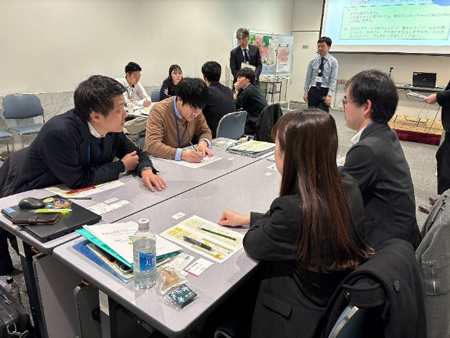
Shiro Tani, the deputy secretary-general of Mayors for Peace, presented an overview of the content and impact of peace education, as well as its implementation status in Japan.Icebreakers and group work were then facilitated by Soichi Hiura, assistant director of the Peace Studies Division. Each participant described their own government's initiatives and challenges, prompting a lively exchange of views.
Group work in progress
■ Day 2 — Learning about the Realities of the Atomic Bombing
After touring the Peace Memorial Museum, participants listened to Shingo Naito give his A-bomb testimony.
Many had never heard a hibakusha testimony.
Common reactions were, "The devastating realities of the atomic bombing became more vivid and deeply moving to me"; and "As the hibakusha age, the opportunity to hear a hibakusha's experience firsthand was extremely precious."In the afternoon, the group toured the monuments in Peace Memorial Park with a Peace Volunteer guide and experienced an AI-powered Atomic Bomb Testimony Response Device (currently in the trial phase). The device answers questions about hibakusha testimony. Learning this historical background while walking on the very ground where it occurred gave participants a deeper, more personal understanding of the realities of atomic bombing. It also renewed their commitment to peace and deepened their understanding of how these experiences can be passed down to future generations.
■ Day 3 — Drafting and Presenting Policy Proposals on Peace Studies for Youth
Building on what they had learned thus far, the participants were divided into four groups and asked to draft policy proposals for peace studies for youth.
After sharing their proposals with each other and discussing them using the World Café method, they presented their ideas to Kazumi Matsui, the mayor of Hiroshima, and Takehiro Kagawa, the secretary-general of Mayors for Peace.
Group A (Hakodate City, Bunkyo Ward, Nagareyama City, Nagasaki City):
"Sustainable Peace Education"
Recognizing that "peace studies today tend to be sporadic and limited," they proposed a "cycle of learning" timeline to keep learning experiences happening continuously from elementary school up into adulthood, with each generation playing a defined role."Sustainable Peace Education"
For elementary school students, they proposed that local governments send selected students to Hiroshima and Nagasaki and "record their experiences on video to share with those who are unable to visit."
For junior high school students, they proposed making Hiroshima and other peace-related sites destinations for school excursions. The excursions should be followed up by “creating ways for students who visit these destinations to share what they learned with elementary school students."
For high school students and older, they proposed that initiatives to ensure that learning would continue, such as training them to serve as peace studies facilitators through learning from dispatched Atomic Bomb Legacy Successors.
Group B (Kita Hiroshima City, Yamagata City, Fussa City, Ohbu City):
"From Indifference to Engagement"
Challenged by the recognition that "Even when we organize good initiatives, the students who show up are mostly those already interested in peace," the group proposed initiatives targeting those with little interest in the subject."From Indifference to Engagement"
Specifically, "to create opportunities to ponder peace without making it the main focus," they suggested holding stamp rallies in places where young people congregate. Another idea is to display posters that pose questions like "Which is more peaceful, A or B?" The goal would be to get people who see the posters to stop and think.
Group C (Joetsu City, Hino City, Abiko City, Hiroshima City):
"Peace as a Personal Concern"
They identified a lack of empathy as a key factor contributing to young people's limited interest in peace-related issues.
This problem stems from generational and regional divides, compounded by a lack of dialogue.
To address this challenge, they proposed a form of peace education that brings together people from different generations and perspectives, helping young people view peace as a personally relevant issue."Peace as a Personal Concern"
Specifically, the proposal emphasized sensory experiences during formative years: Elementary school students learn about the wartime history of their communities. It was also proposed that middle school students visit Hiroshima, Nagasaki, and other peace-related sites to interact with peers and then share what they learned with elementary school students, and that adults play a role in connecting generations by participating in school education as legacy successors of wartime experiences.
Group D (Nagaoka City, Setagaya Ward, Nagoya City, Kagoshima City):
"Preserving History Looking at 100 and 200 years after WWII"
Recognizing the challenge that "A hundred years after the war, children won't be able to meet firsthand witnesses in person," they proposed a 20-year vision of creating a book that captures the realities of war in the words of children themselves."Preserving History Looking at 100 and 200 years after WWII"
Specifically, their roadmap calls for local governments to reexamine and document wartime experiences in their own districts, then promote peace education through workshops organized in conjunction with peace departments and boards of education. The initial objective would be to expand these efforts to the prefectural, then national levels. Ultimately, the goal would be to bring children together from around the country to convey the realities of war in their own words, then compile them into a book.
■ Participant reactions
Participants reported that they found these experiences enriching.
Recognizing the sporadic nature of government-led peace education efforts, some expressed determination to work for change:
"We will continue to examine initiatives with a view to sustaining peace education over the long term.Through their experience of learning about the realities of the atomic bombing in Hiroshima, participants said they came to realize that visiting sites affected by the bombing and other traces of war, as well as listening directly to firsthand accounts, leads to deeper learning through the five senses.
We hope the insights gained and the networks created through this initiative will energize peace promotion activities in member cities and advance peace-related policies nationwide.
(Peace Culture Planning Division)